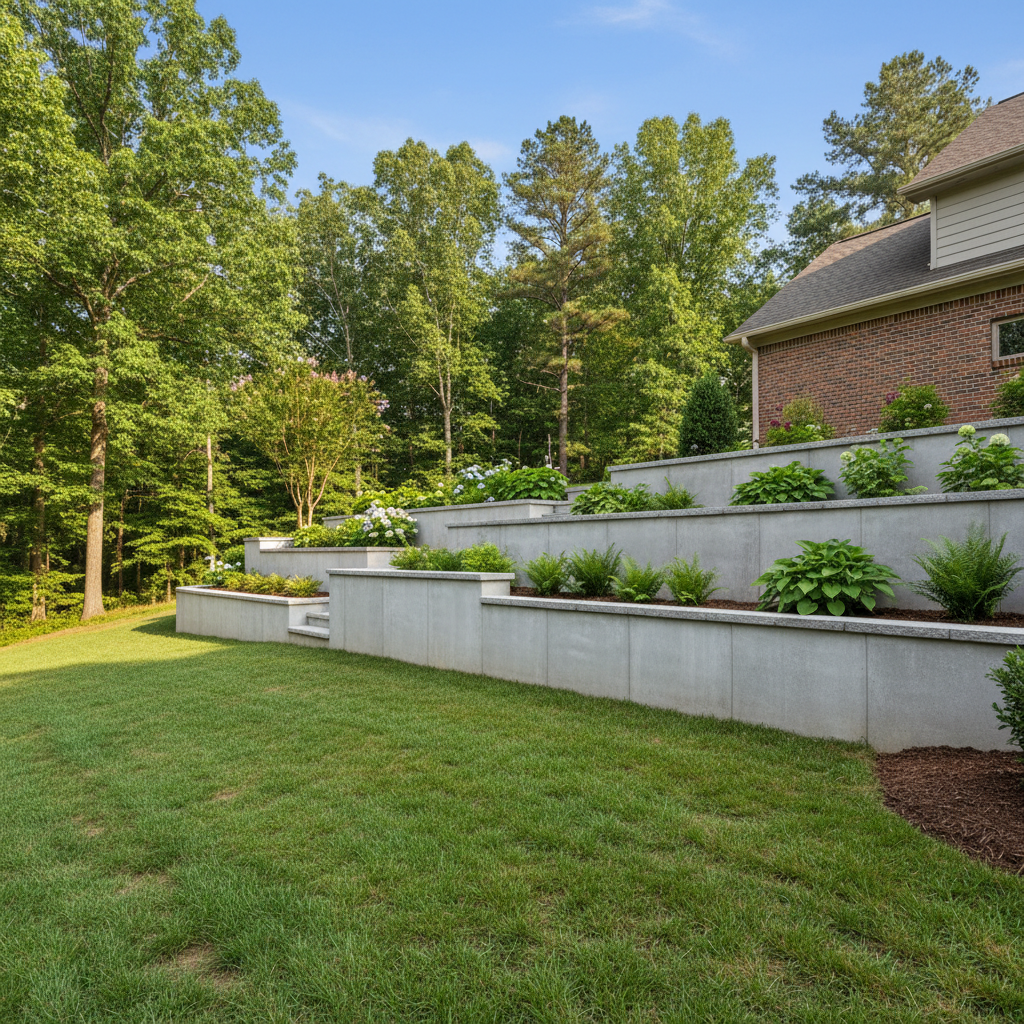
You need a retaining wall. Maybe your yard slopes too much, or you're trying to reclaim some usable space. A good concrete retaining wall can solve a lot of problems, but I've seen plenty of folks around Lenoir make some pretty big blunders that turn a simple project into a nightmare. Let's talk about what to watch out for.
Mistake #1: Ignoring the Dirt Underneath
This is probably the biggest one, and it's where a lot of contractors cut corners too. Your retaining wall isn't just holding back dirt; it's holding back a lot of weight and pressure. What's underneath that wall is critical. I'm talking about the soil. Here in Lenoir, especially in some of the older neighborhoods like down by the river, you can hit all sorts of stuff – clay, loose fill, even old rock beds. If your contractor doesn't do a proper site evaluation, including understanding the soil conditions and drainage, you're asking for trouble. A wall built on unstable ground will fail, plain and simple. It'll crack, lean, or worse, collapse. Always ask about their plan for site prep and foundation. If they just want to dig a shallow trench and pour, that's a huge red flag.
Mistake #2: Forgetting About Drainage (or Doing It Wrong)
Water is the enemy of any retaining wall. When rain soaks into the soil behind your wall, it gets heavy. Really heavy. If that water can't escape, it builds up hydrostatic pressure, pushing against the wall. That's how walls get bowed out, cracked, and eventually fail. A proper retaining wall needs a robust drainage system. This usually means a layer of gravel behind the wall, a perforated drain pipe (often called a 'French drain'), and weep holes or outlets for that water to actually go somewhere. I've seen walls built without any drainage at all, and they don't last. Or worse, the drain pipe is installed, but it's not sloped correctly, or it's just dumping water right into your foundation. Make sure your contractor has a clear plan for managing water behind and around the wall.
Mistake #3: Skimping on Engineering and Permitting
Look, I get it. Nobody likes paperwork or extra costs. But for any retaining wall over a certain height (often 4 feet, but check with Lenoir's planning department), you're going to need an engineer's stamp. This isn't just bureaucracy; it's about safety. An engineer will design the wall to handle the specific loads and soil conditions of your property. They'll specify the right materials, reinforcement, and drainage. Trying to bypass this can lead to a wall that's structurally unsound, and if it fails, you're on the hook for all the damage. Plus, building without the proper permits can lead to fines, stop-work orders, and even requiring you to tear down a new wall. It's just not worth the risk. A reputable contractor, like us at Coastal Concrete Co, will guide you through the permitting process and insist on engineering when it's required.
Mistake #4: Picking the Cheapest Bid Without Asking Questions
Everyone wants a good deal, but concrete work isn't the place to go solely by the lowest price. A really low bid often means someone is cutting corners – either on materials, labor, or proper procedures. They might not be licensed, insured, or experienced with retaining walls. Ask questions: What's included in the bid? What kind of concrete are they using? What's their warranty? Can they provide references for similar projects? How long have they been in business? A good contractor will be transparent and happy to answer all your questions. If they're vague or pushy, that's a sign to look elsewhere. You're investing in something that needs to last for decades, not just a few years.
Mistake #5: Not Understanding Maintenance
Once your retaining wall is built, it's not completely maintenance-free. You'll need to keep an eye on it. Make sure the drainage outlets aren't clogged with leaves or debris. Check for any cracks or signs of movement, especially after heavy rains or freezes. If you see small issues, address them quickly before they become big problems. A little proactive care can extend the life of your wall significantly.
Building a concrete retaining wall is a solid investment in your property. Just make sure you're going into it with your eyes wide open, avoiding these common mistakes. It'll save you a lot of grief and money down the road.